
Choosing the Right Cladding
Seven things homeowners building or renovating around the Rotorua lakes should know.
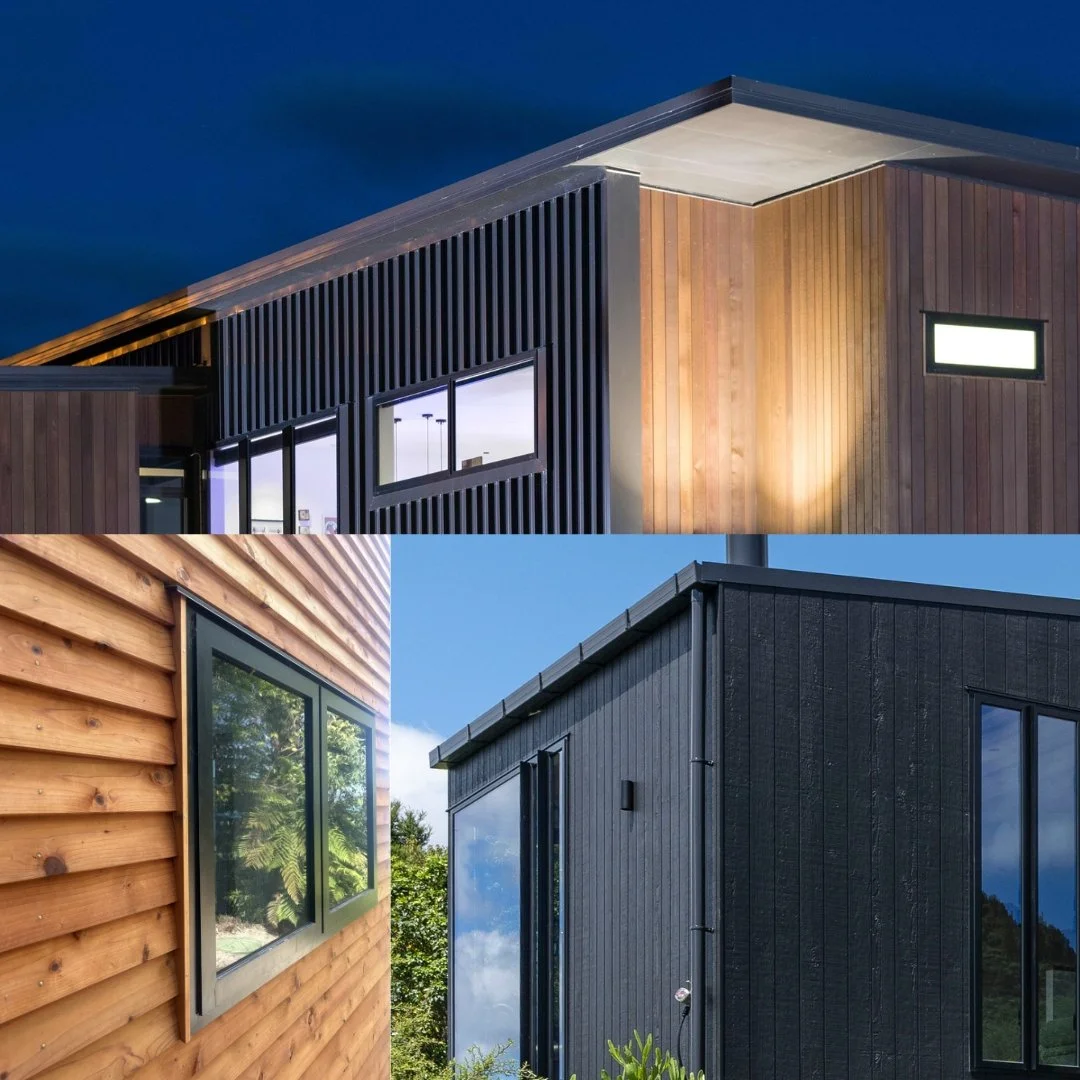
Cladding is the skin of your home - the first thing people see, and the first line of defence against the elements. Get it right and your home looks great for decades with minimal upkeep. Get it wrong and you could be looking at costly maintenance and a facade that doesn’t hold up. Building around the Rotorua region adds another layer to this decision. Here’s what you need to know.
01. Cladding sets the character of your home before anyone steps inside
The same floor plan can feel warm and organic, sleek and contemporary, or bold and industrial - entirely depending on the material wrapping it. Cedar brings warmth and a natural connection to the bush setting. Fibre cement offers crisp, architectural lines. Dark metal creates drama that blends into green surroundings. This is why we start the cladding conversation early in the design stage, not after consents are lodged - the material choice drives the entire exterior palette.
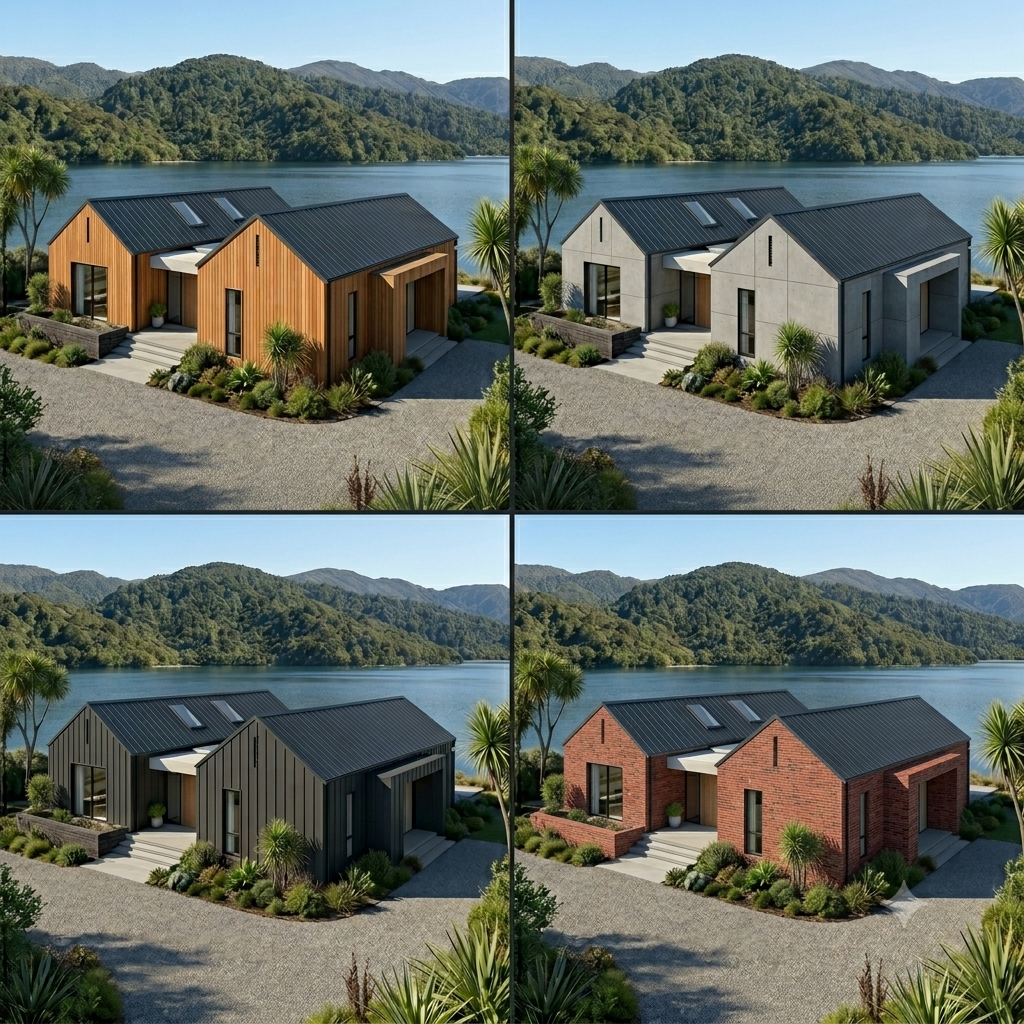
The same house rendered in different cladding dramatically changes the feel of the home.
02. It’s a functional system, not just a surface.
Beyond aesthetics, cladding manages moisture, regulates temperature, resists fire, and protects structural integrity. Key factors to weigh:
Durability and lifespan. Some materials, properly specified and maintained, will last the life of the building. Others require cyclical repainting, restaining, or resealing. Factor in not just the upfront cost, but the total cost of ownership over 30 years.
Thermal performance. Cladding choice can influence how well your home retains heat - an important consideration as New Zealand’s building code pushes toward higher energy efficiency standards.
Fire resistance. Some materials offer significantly better fire resistance than others - an important consideration in certain zone classifications and for homes set in bush-edge locations.
Maintenance. Cedar can require restaining every two to three years. Fibre cement, once painted, needs recoating far less frequently. Metal cladding is largely maintenance-free, but can be costly to touch-up if scratched or dented. Be honest with yourself about how much ongoing upkeep you’re prepared to commit to.
03. The five cladding types often used in NZ architectural builds.
Timber (cedar and macrocarpa).
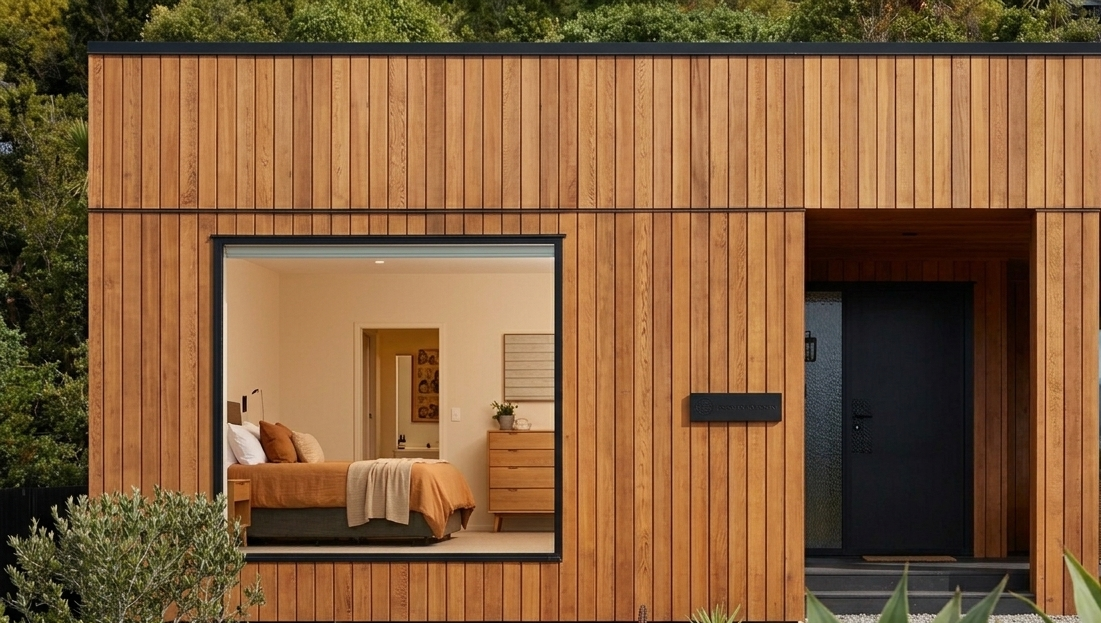
Cedar is naturally oily, moisture-resistant, and beautiful left to silver or treated with a penetrating stain. Macrocarpa is a popular NZ-grown alternative with a warmer grain.
Fibre cement.
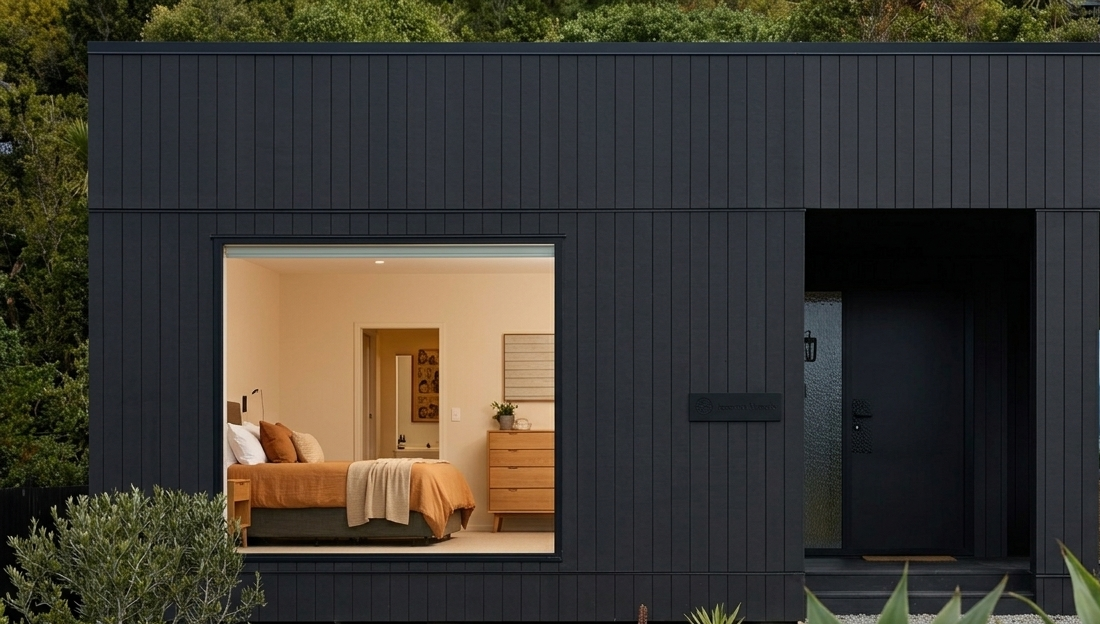
James Hardie’s Scyon range offers a weatherboard look with lower maintenance. Fire-resistant, moisture-resistant, and a strong all-rounder.
Metal (Colorsteel or aluminium).
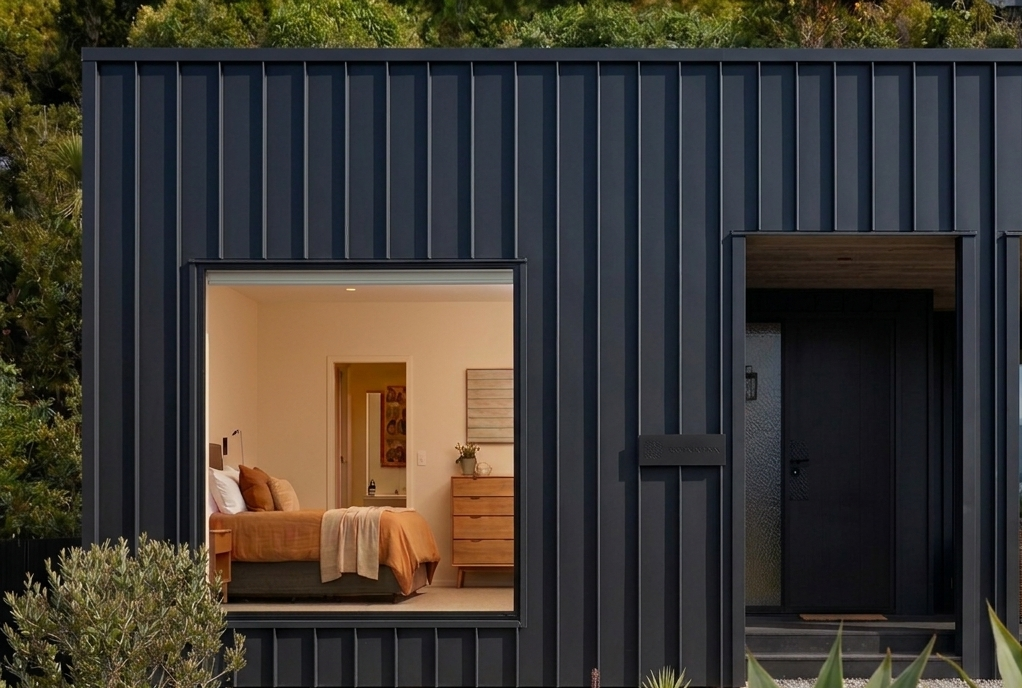
Corrugate and flat-pan profiles deliver durability and clean contemporary lines. Pairs well with timber for that dark-and-warm contrast common in premium NZ builds.
Thermally modified timber (Abodo and similar).
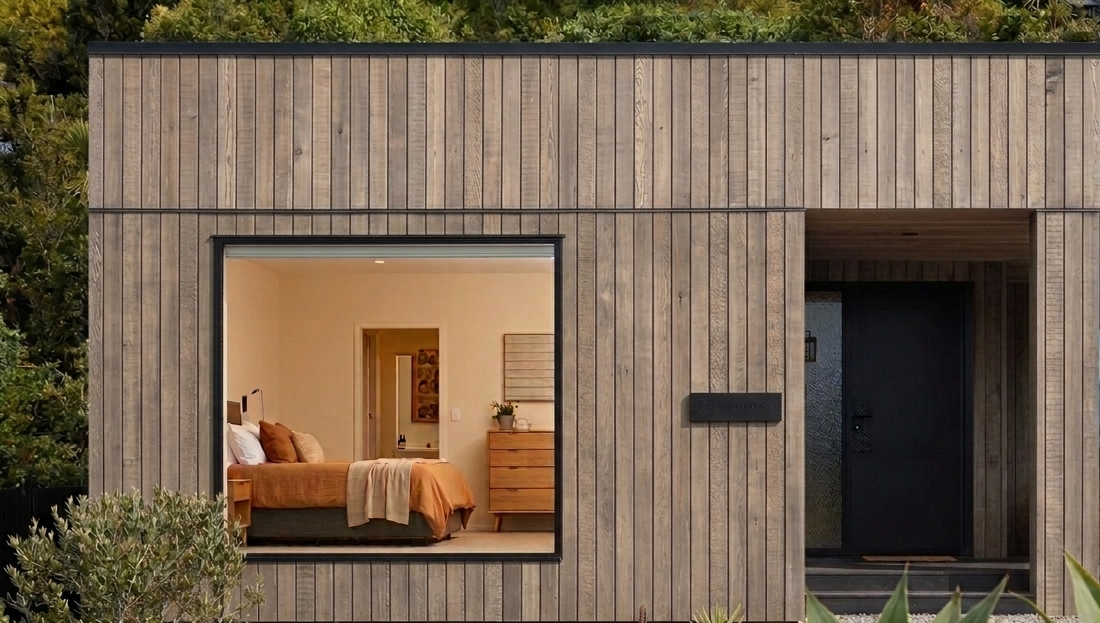
Heat-treated for improved stability and decay resistance. Offers the warmth of natural timber with better performance in high-humidity lake environments.
Mixed-material combinations.
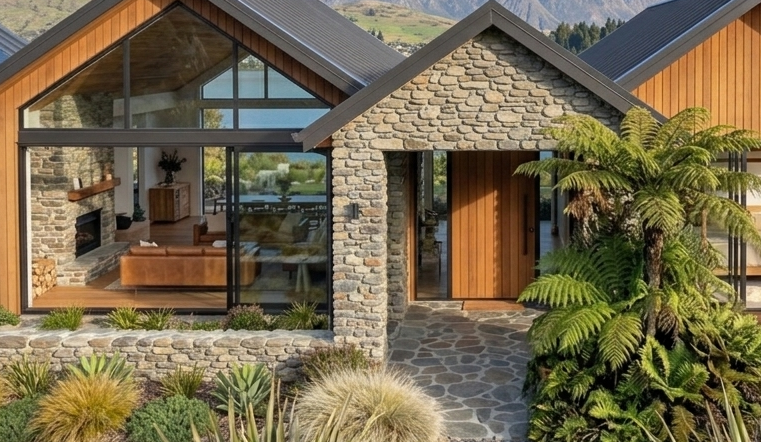
Combining two or three cladding types - dark metal, cedar or Abodo, stone, for example - creates visual hierarchy and a bespoke quality that single-material exteriors rarely achieve. We are currently seeing several plans that incorporate natural stone for feature walls, which works beautifully in our lakes environment.
04. Building near the Rotorua lakes changes what you should specify.
This is the one most homeowners underestimate. BRANZ research (Study Report SR458) confirms that active geothermal areas are among the most corrosive building environments in New Zealand. Sulphur dioxide reacts with moisture to form sulphuric acid, which attacks zinc-based coatings. Materials that perform perfectly well in Auckland can degrade far more quickly here.
It’s not just cladding - aluminium joinery, flashings, spouting, and hardware all need careful specification in this environment. This is the kind of local knowledge that separates a builder who knows the region from one who doesn’t.
05. What actually holds up in a geothermal environment.
Fibre cement (e.g. James Hardie). The safest call for most Rotorua builds. Completely unaffected by sulphur - it won’t corrode, rot, or react with the atmosphere.
Colorsteel - but specify the right grade. Endura or Maxx grades are best for geothermal environments. Standard grades carry a less robust paint system and could degrade faster.
Aluminium cladding. Doesn’t rust and can hold up better than steel in harsher environments. Higher cost, but a sound long-term investment for exposed sites.
Timber, carefully specified. Cedar and macrocarpa can work beautifully here - but avoid CCA-treated timber. The copper reacts with sulphur and can cause unsightly blackening. Fix with stainless steel hardware only.
06. The fixings matter as much as the cladding.
Standard zinc-coated screws and nails could corrode prematurely in sulphur-rich air. A4-grade (marine-grade) stainless steel is best for all exposed fixings: screws, nails, brackets, joist hangers, and structural connectors. A house can have the perfect cladding and still fail at the junctions if this step is skipped. In our experience, getting the fixings right is what separates a 10-year problem from a 40-year building.
07. Four trends we’ve been observing
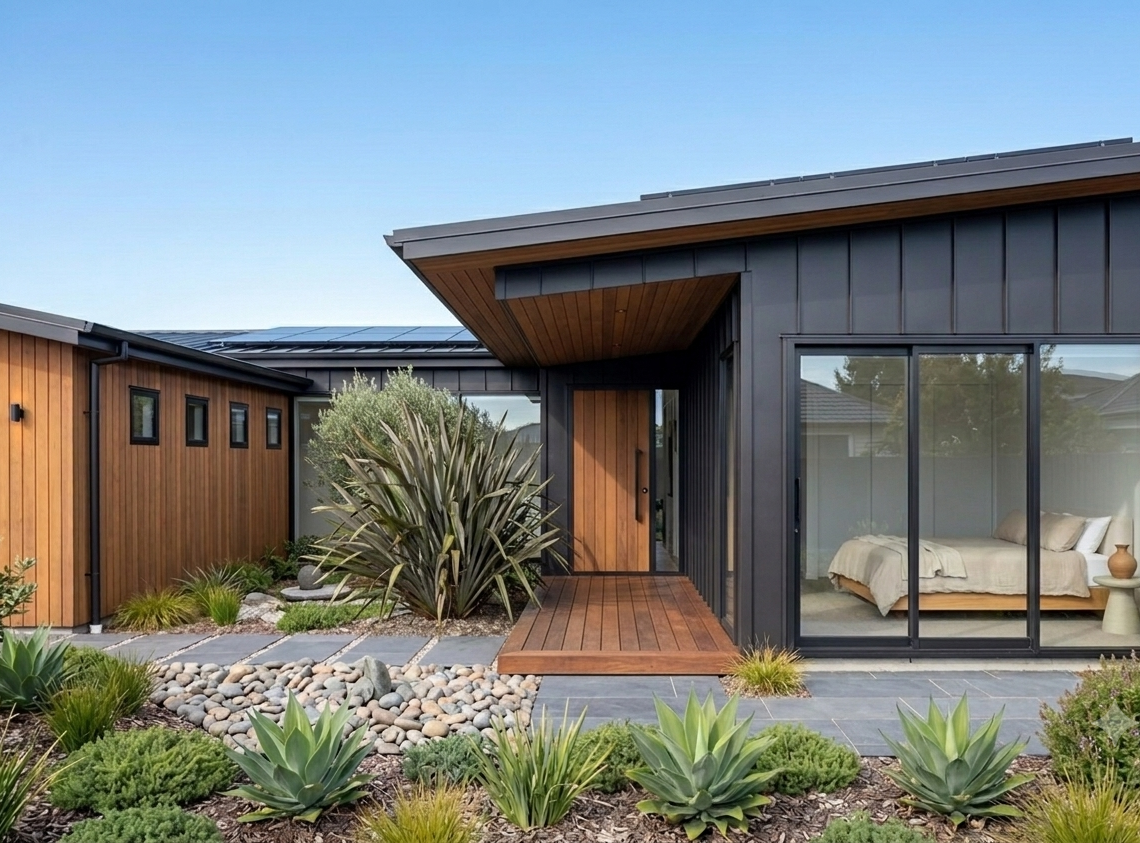
Textured profiles. Flat facades are giving way to cladding with depth and shadow. The euro or tray profile - linear, widely spaced ridges - is gaining popularity for the way light plays across it.
Organic colour palettes. Stark whites and cool greys are giving way to mossy greens, clay browns, and deep charcoals that feel rooted in the natural environment. Timber stains that celebrate the grain rather than mask it are also trending.
Sustainability as a core criterion. Eco-certified timber, low-embodied-carbon fibre cement, and recycled metal products are all seeing increased specification as clients build with a longer horizon in mind.
Mixed-material exteriors. Combining cladding types creates visual hierarchy and a bespoke quality. Locally, we’re seeing this particularly with stone feature falls. We expect this to continue defining high-end NZ builds.
